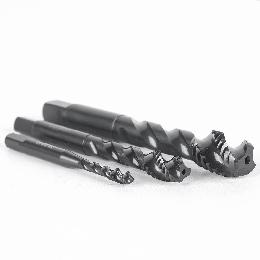
The black-oxide finish on these taps retains lubricants to improve the taps' wear resistance and chip flow. Black-oxide taps should only be used on ferrous metals. These taps meet DIN length standards and have a longer overall length than taps that meet ISO, ANSI, and JIS length standards. They also meet ANSI shank standards, which means they measure their shank diameter in inches and fit in standard tools used in the U.S.
+ Add to CartThe black-oxide finish on these taps retains lubricants to improve the taps' wear resistance and chip flow. Black-oxide taps should only be used on ferrous metals. These taps meet DIN length standards and have a longer overall length than taps that meet ISO, ANSI, and JIS length standards. They also meet ANSI shank standards, which means they measure their shank diameter in inches and fit in standard tools used in the U.S.
+ Add to CartThe black-oxide finish on these taps retains lubricants to improve the taps' wear resistance and chip flow. Black-oxide taps should only be used on ferrous metals. Coolant-through taps have holes that allow coolant to flow to their tip to reduce heat and friction during threading tasks. These taps meet DIN length standards and have a longer overall length than taps that meet ISO, ANSI, and JIS length standards. They also meet ANSI shank standards, which means they measure their shank diameter in inches and fit in standard tools used in the U.S.
+ Add to Cart